Beyond Lettuce: Crafting the Perfect Traditional Greek Salad
There are few culinary experiences as quintessential to the Mediterranean summer as the traditional Greek Salad, known locally as
Horiatiki Salata. This isn't just a dish; it's a celebration of simplicity, freshness, and the bountiful produce that thrives under the Greek sun. Far from a mere side dish, an authentic Horiatiki embodies the rustic charm of village life, offering a vibrant, satisfying, and incredibly easy meal. When you seek the ultimate
Authentic Horiatiki: The Simple 10-Minute Greek Village Salad, you’re embarking on a journey back to basics, where quality ingredients speak for themselves.
The name "Horiatiki Salata" literally translates to "Village Salad," a moniker that perfectly encapsulates its essence: humble, garden-fresh, and unpretentious. It's a salad designed not to be mixed but rather to be appreciated in its individual components, brought together by the drizzle of liquid gold – extra virgin olive oil – and a generous sprinkle of wild Greek oregano. This iconic
Summer's Go-To: Easy Greek Salad Bursting with Mediterranean Flavor is surprisingly filling, making it a perfect light lunch or a robust dinner without ever feeling heavy, thanks to the wholesome goodness of its ingredients. If you’re searching for the ideal
greek salad recipe, you've found the definitive guide to creating this Mediterranean masterpiece.
The Heart of Horiatiki: Essential Ingredients for the Perfect Greek Salad Recipe
An authentic traditional Greek Salad is defined by a precise, yet simple, set of ingredients. Understanding each component’s role is crucial to unlocking the true flavors of this classic. Forget about fancy dressings or complex preparations; the magic lies in the quality and freshness of what you start with.
The Core Seven: Unpacking Authenticity
1.
Sun-Ripened Tomatoes: These are the undisputed stars. Forget pale, supermarket tomatoes; you need juicy, deep-red, fragrant tomatoes bursting with natural sweetness and acidity. Cut them into rustic, chunky pieces – not dainty wedges. Their natural juices form part of the salad's "dressing."
2.
Crisp Cucumbers: Providing a refreshing crunch, cucumbers are a vital counterpoint to the rich tomatoes. Traditionally, they are peeled partially or left unpeeled and cut into substantial, half-moon slices.
3.
Red Onion: Thinly sliced red onion adds a gentle sharpness and a beautiful purple hue. For those sensitive to the raw bite of onion, a quick soak in cold water can mellow its intensity without sacrificing flavor.
4.
Green Bell Pepper: Sliced into rings or chunky strips, the green pepper contributes a subtle sweetness and an additional layer of crisp texture. It's an often-overlooked but essential element for that authentic flavor profile.
5.
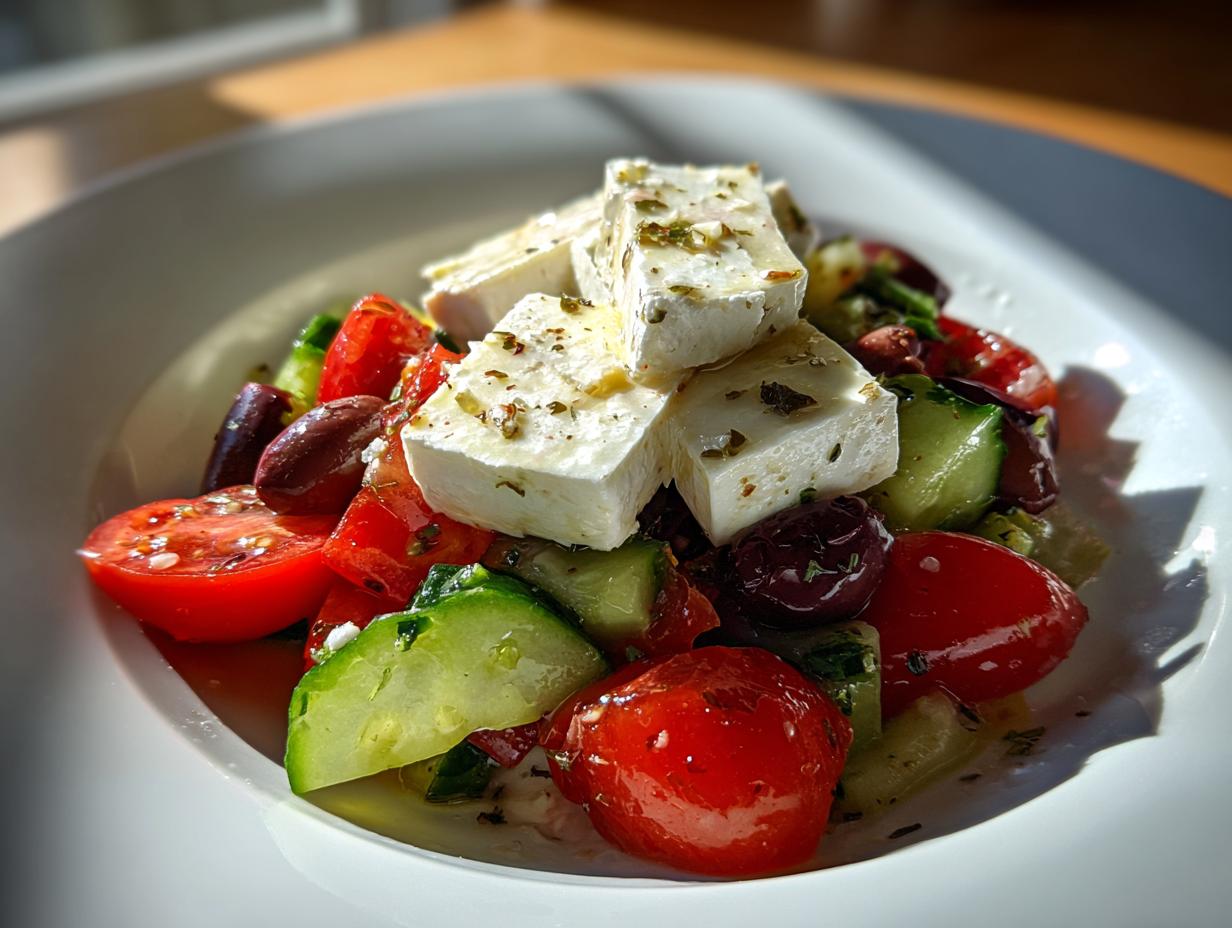
Creamy Feta Cheese: This is not just any cheese; it's *feta*. Look for authentic PDO (Protected Designation of Origin) feta made from sheep's milk, or a blend of sheep and goat's milk. Crucially, it's served as a generous slab placed atop the vegetables, not crumbled and mixed throughout. Its briny, tangy creaminess is the soulful core of the salad.
6.
Briny Kalamata Olives: These distinctively almond-shaped, purplish-black olives are essential. Their rich, fruity, and slightly salty flavor is unmistakable. Serve them whole, pits in, for an authentic experience.
7.
Extra Virgin Olive Oil: The lifeblood of the Mediterranean diet and the sole "dressing" for Horiatiki. Drizzle generously with high-quality, fruity extra virgin olive oil. Its rich flavor binds all the ingredients together.
8.
Dried Greek Mountain Oregano: A final flourish of aromatic dried oregano, preferably wild Greek mountain oregano, elevates the flavors. Its potent, earthy notes are distinct from common oregano and are non-negotiable for authenticity.
The "No-Lettuce" Rule and Its Significance
One of the most common misconceptions about Greek salad is the inclusion of lettuce. In Greece, an authentic Horiatiki Salata *never* contains lettuce. The robustness of the tomatoes, cucumbers, and peppers, combined with the richness of feta and olive oil, provides ample body and texture. Adding lettuce would dilute the intense flavors and introduce a watery element that detracts from the traditional experience. The beauty of this
greek salad recipe lies in its pure, unadulterated focus on its core ingredients.
Beyond the Basics: Elevating Your Greek Salad Experience
While the traditional seven ingredients form the backbone of a classic Horiatiki, there are popular additions, both traditional and modern, that can enhance or slightly adapt the experience to personal preferences. It's important to distinguish these as *additions* rather than core components of the most authentic
greek salad recipe.
*
Lettuce and Arugula (Modern Twists): As mentioned, these are not traditional. However, for those who enjoy a leafy base, shredded romaine or baby arugula leaves can be gently tossed in *separately* if desired. If you do, consider adding a few drops of red wine vinegar or fresh lemon juice to balance the flavors.
*
Capers: A popular addition in some regions of Greece, particularly islands. A scattering of baby capers or even brined caper leaves (known as *kritamos* or sea fennel) can introduce a delightful salty, savory boost and an intriguing texture. Kritamos, preserved in brine, offers a unique, slightly pungent oceanic flavor.
*
Paximadi (Greek Rusks): For an extra layer of texture and to make the salad even more substantial, Greek rusks (paximadi) are a fantastic addition. These dry, crunchy bread slices, either wheat or traditional barley, absorb the delicious tomato juices and olive oil, softening slightly to create a rustic, almost bread-salad-like experience.
*
Avocado (Non-Traditional, but Delicious): While certainly not Greek, chopped creamy avocado is a fantastic addition for those looking for extra richness, or as a substitute if you're skipping the feta. Drizzling it with a little lemon juice prevents browning and brightens its flavor.
*
Red Wine Vinegar or Lemon Juice: The natural acidity of ripe tomatoes and the robustness of olive oil often make an additional dressing unnecessary. However, a few drops of red wine vinegar or a squeeze of fresh lemon juice can be added for a tangy kick, especially if your tomatoes aren't at their peak. This is purely a matter of personal preference.
Crafting Your Village Salad: A Simple Process, Timeless Taste
The beauty of the Horiatiki is its sheer simplicity of assembly. There's no complex vinaigrette to whisk, no elaborate tossing required. The preparation of this
greek salad recipe is almost ceremonial in its straightforwardness, honoring each ingredient.
Step-by-Step Assembly for the Ultimate Greek Salad Recipe
1.
Prepare Your Vegetables: In a shallow bowl or deep plate, artfully arrange your ingredients. Start with the chunky-cut ripe tomatoes, ensuring some of their juices collect at the bottom. Next, add the sliced cucumbers, thinly sliced red onion, and green bell pepper. The key here is rustic charm – don't overthink the arrangement.
2.
Place the Feta: Crucially, place a single, generous block of feta cheese directly on top of the vegetables. This traditional presentation allows the feta to maintain its integrity, preventing it from crumbling or dissolving into the other ingredients until you decide to break it apart.
3.
The Golden Drizzle: Liberally drizzle the entire salad with high-quality extra virgin olive oil. Don't be shy; the oil is a vital component, lending richness and flavor while helping to meld the ingredients.
4.
The Aromatic Finish: Finally, sprinkle generously with dried Greek mountain oregano. The heat from the oil can sometimes help release the oregano's fragrant oils.
5.
The "No-Mix" Philosophy: Resist the urge to toss! An authentic Greek salad is traditionally served untossed. This presentation allows each diner to appreciate the individual components, and to break off pieces of feta, tomato, and cucumber as they eat, mixing them with the collected juices and oil at the bottom of the plate. This method also ensures the feta doesn't become mushy or overly integrated.
Serve your Horiatiki immediately as an appetizer, a vibrant side dish, or as a fulfilling main meal. Its simplicity makes it an ideal choice for a quick summer dinner or a lazy weekend lunch. This truly is the classic
Summer's Go-To: Easy Greek Salad Bursting with Mediterranean Flavor that promises delight in every bite.
Why the Traditional Greek Salad Reigns Supreme
The enduring popularity of the traditional Greek salad isn't just a testament to its deliciousness; it's a nod to a philosophy of eating that prioritizes fresh, whole ingredients and simple preparation. It embodies the core tenets of the Mediterranean diet – rich in healthy fats, vegetables, and lean proteins (from the feta). This is a dish that makes you feel good, inside and out. It's light yet incredibly satisfying, proving that healthy eating doesn't have to be complicated or flavorless. The Horiatiki Salata is more than a
greek salad recipe; it's a cultural icon, a symbol of Greek hospitality, and a celebration of the simple joys of eating well.
Conclusion
Creating the perfect traditional Greek Salad, or Horiatiki, is an experience in itself – a journey to the heart of Greek cuisine. It’s a testament to the power of quality ingredients and simple preparation, proving that the most profound flavors often arise from the most unpretentious dishes. By adhering to the authentic core ingredients and the traditional "no-mix" method, you’ll unlock a taste that transports you straight to a sun-drenched Greek village. So, gather your sun-ripened tomatoes, your finest feta, and your best olive oil, and savor the timeless appeal of this magnificent salad. Enjoy the vibrant, fresh, and utterly delicious simplicity of an authentic Greek classic.